Contraception the Baby Bust During the Great Depression
When are you lot more likely to conceive?
We're talking about the 'fertile window' – the days in a adult female'southward menstrual cycle when pregnancy is possible. The 'fertile window' depends on the length of the menstrual cycle, which varies amongst women.
The 'fertile window' is the day an egg is released from the ovary (ovulation) and the five days beforehand. Having sex activity (intercourse) during this fourth dimension gives you the best take a chance of getting meaning.
Ovulation Figurer
-
What is an ovulation calculator and how does it help y'all go pregnant?
This ovulation estimator or ovulation calendar can help yous work out your well-nigh fertile time. These are the days y'all are most likely to become meaning.
Information technology can also judge your due engagement if you do go pregnant during your next fertile days.
Others means to assistance you work out when you're ovulating:
- Observe changes in vaginal mucus
A few days before ovulation, y'all may notice your vaginal mucus becomes articulate, slick and slippery, and feels a chip like egg white.
This is a sign that ovulation is about to happen. It'southward the all-time time to take sex, as sperm travel more easily in this kind of mucus.
- Utilise an ovulation predictor kit
Y'all tin can use a predictor kit from a supermarket or pharmacy, to test your urine for signs of ovulation. If you commencement testing your urine a few days before the day you next wait to ovulate, a positive upshot means you are going to ovulate within the side by side 24 to 36 hours (i to two days).
-
Facts about timing
Ovulation is when a mature egg is released from the ovary. The egg so moves downwardly the fallopian tube where it tin be fertilised. If sperm are in the fallopian tube when the egg is released, there is a adept risk that the egg will be fertilised, creating an embryo, which can grow into a baby.
Pregnancy is technically only possible if you have sex during the v days earlier ovulation or on the 24-hour interval of ovulation. Only the most fertile days are the three days leading up to and including ovulation. Having sex during this time gives yous the best chance of getting pregnant.
By 12-24 hours after ovulation, a woman is no longer able to become pregnant during that menstrual wheel considering the egg is no longer in the fallopian tube.
There'south almost no risk of getting significant if you have sexual practice before or later on the fertile window (but if you're not trying to go pregnant, don't rely on this – contraception is your best option!).
-
How to know when you're ovulating
Knowing when you ovulate can assistance y'all program for sexual practice at the correct fourth dimension and meliorate your risk of getting meaning. You can keep track of your menstrual cycles on a chart, in a diary, or on a free period-tracker app on your smartphone.
To work out the length of your menstrual cycle, tape the first twenty-four hour period you start bleeding (offset day of your period). This is day 1. The terminal twenty-four hours of your bike is the day before your adjacent period begins.
- What is a 'menstrual cycle' and a 'menses'?
Some people recollect the 'menstrual bicycle' and a 'period' are the same matter.
A period is when you bleed (or menstruate).
A menstrual wheel starts on the twenty-four hour period when a flow starts (twenty-four hour period 1) and ends the day before the next flow. A wheel's length is considered normal if it'due south betwixt 21 and 35 days. They can vary between women and from ane cycle to the adjacent.
- Working out your 'average' menstrual cycle length
If your menstrual cycles are different lengths (about women'south cycles are) you can work out your boilerplate cycle length.
The number of days in a adult female'southward menstrual cycle tin vary month to calendar month. Periods are non e'er regular. It tin can be useful to work out an 'average' cycle length, based on the length of three menstrual cycles, to estimate when yous're most likely to be ovulating.
If you lot add the number of days in three cycles and divide the total number by three, it gives you lot your average cycle length.
Instance
Sarah tracked her last three menstrual cycles by counting the time from the first day of one period, to the twenty-four hours earlier the next period.
Cycle ane was 28 days; Cycle 2 was 32 days; Bicycle 3 was 27 days
28 + 32 + 27 = 87
87 divided past 3 = 29
So the average length of Sarah's menstrual cycles is 29 days.
- Working out your nearly fertile days
When you lot know your boilerplate menstrual bike length, you tin work out when you ovulate.
Ovulation happens near fourteen days before your period starts.
- If your average menstrual cycle is 28 days, y'all ovulate effectually mean solar day 14, and your most fertile days are days 12, 13 and 14.
- If your average menstrual cycle is 35 days ovulation happens effectually 24-hour interval 21 and your most fertile days are days 19,20 and 21.
- If you lot have shorter cycles, say 21 days, ovulation happens around twenty-four hours 7 and your most fertile days are days 5, 6 and seven.
Your virtually fertile days are the iii days leading up to and including the 24-hour interval of ovulation.
Some women have very irregular cycles or find it hard to work out an average cycle length. This tin can brand information technology difficult to piece of work out when ovulation happens. If it's all besides hard, having sexual practice every 2-iii days covers all bases and improves your chance of getting pregnant.
Myth busting
- MYTH
-
A woman can get pregnant whatever time of the calendar month.
- FACT
-
A woman can only get pregnant on a few days during her menstrual cycle.
Why?
Considering eggs and sperm only alive for a brusque time:
- Sperm alive for around five days.
- Eggs tin can only be fertilised for effectually 24 hours (i day) after beingness released from the ovary.
Eggs and sperm need to come up together at the right time for fecundation to happen to create an embryo.
Getting the timing right
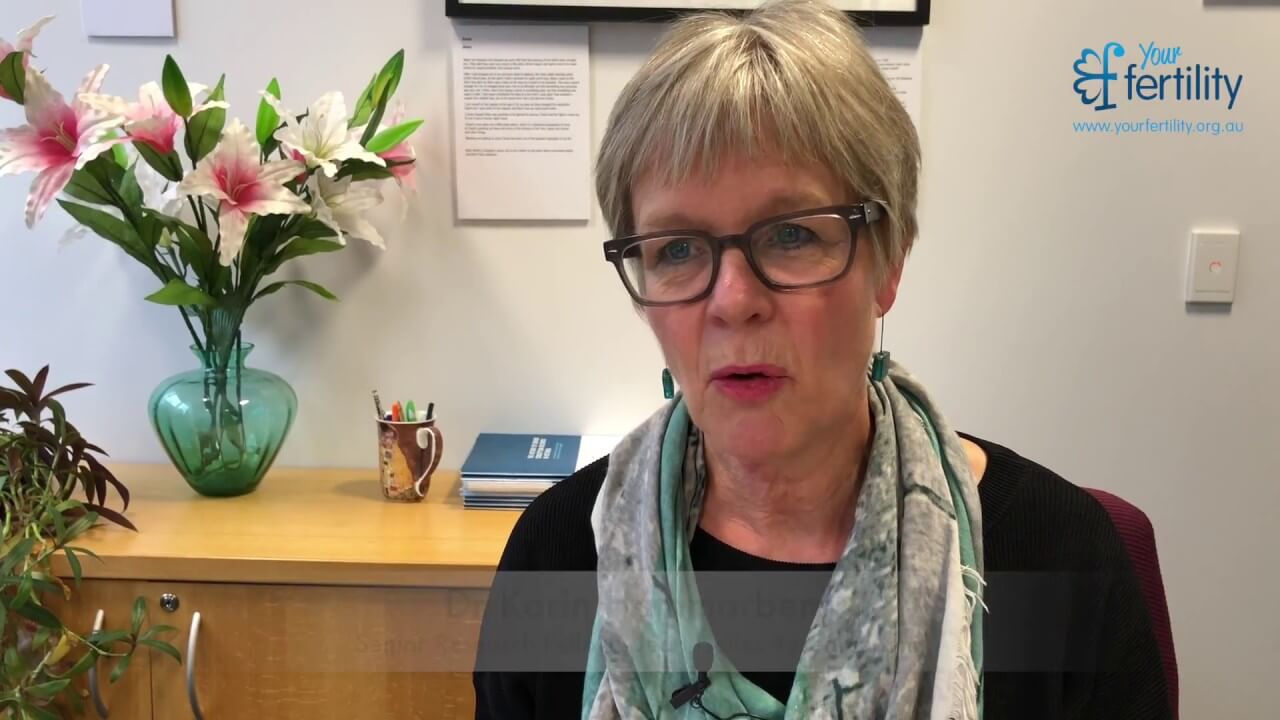
If you're trying to become significant, timing is everything. Dr Karin Hammarberg explains how to piece of work out when you are ovulating and the right fourth dimension to accept sex activity to improve your chance of pregnancy.
-
What are the chances?
Having sexual activity equally close as possible to the time of ovulation increases the chance of pregnancy.
If a adult female has sex six or more days before she ovulates, the chance she will get significant is virtually null.
If she has sex five days before she ovulates, her probability of pregnancy is about 10 percent.
If she has sexual practice on the twenty-four hours of ovulation, or the two days before, the chance of getting meaning is around 30 percent.
These are average figures and depend on a adult female's age.
When does preconception health begin?
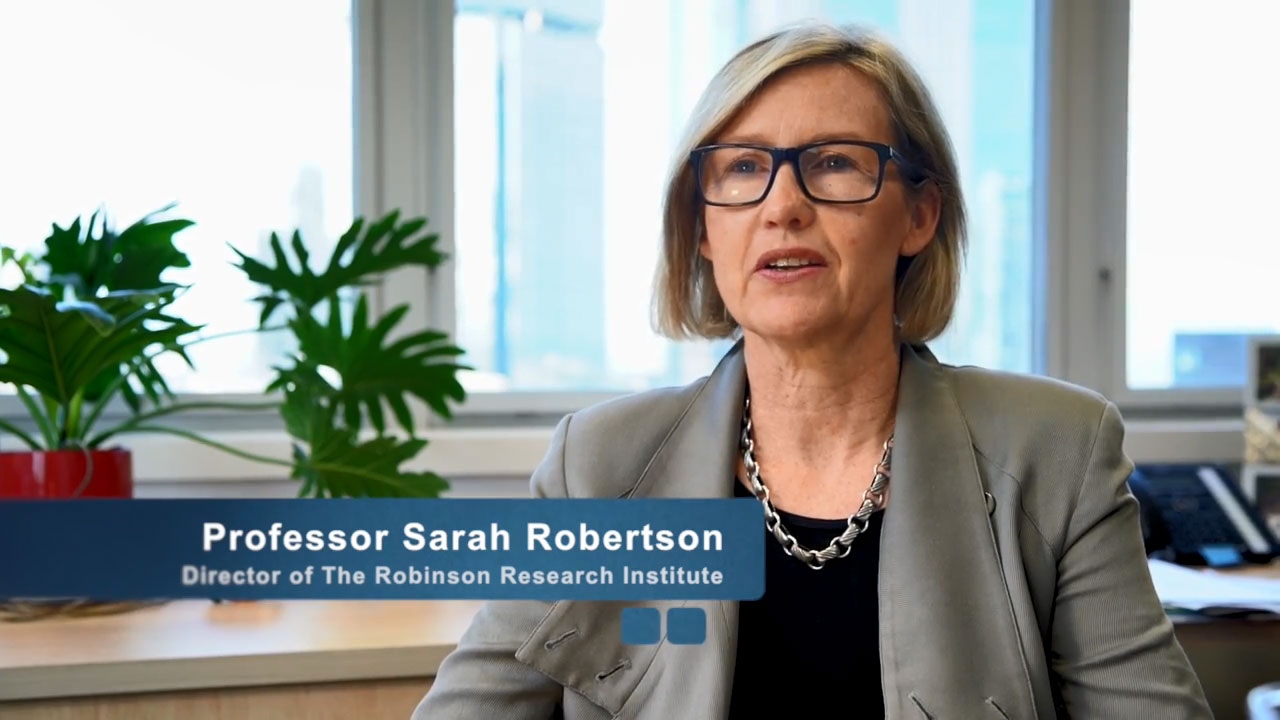
Professor Sarah Robertson, Director of Robinson Enquiry Institute, University of Adelaide, highlights the fundamental time before pregnancy that your wellness is most important to ensure your kid has the best start to life.
How to know you are ovulating
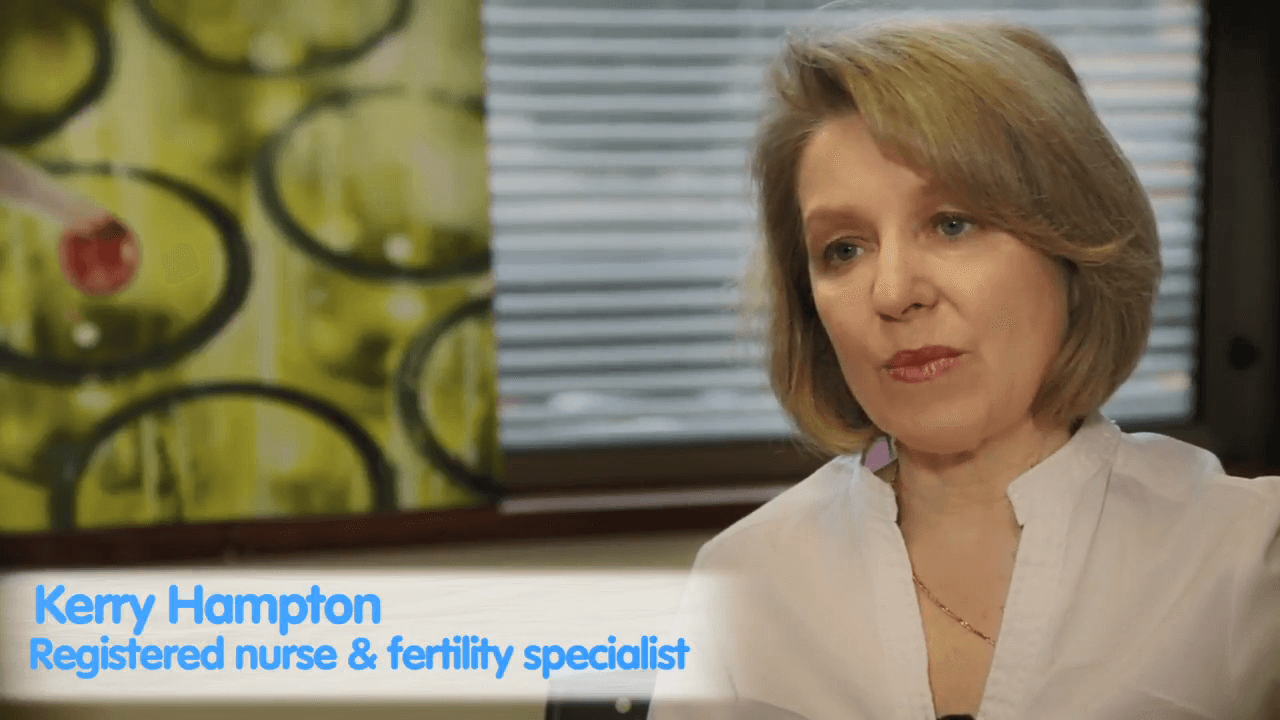
Kerry Hampton, a registered nurse and fertility specialist, discusses the importance of fertility awareness, and how to determine your fertile window to improve your chances of conceiving.
- References
- American Society for Reproductive Medicine, Optimizing natural fertility, https://www.reproductivefacts.org/news-and-publications/patient-fact-sheets-and-booklets/documents/fact-sheets-and-info-booklets/optimizing-natural-fertility/
- Berglund Scherwitzl, et al. (2015). Identification and prediction of the fertile window using Natural Cycles. The European Journal of Contraception and Reproductive Health Care, 20(five), 403-408. doi:10.3109/13625187.2014.988210
- Ecochard, R., et al. (2015). Self-identification of the clinical fertile window and the ovulation period. Fertility and Sterility, 103(5), 1319-1325.e1313. doi: http://dx.doi.org/10.1016/j.fertnstert.2015.01.031
- Pfeifer, S., et al. (2017). Optimizing natural fertility: a commission stance. Fertility and Sterility, 107(1), 52-58. doi: ten.1016/j.fertnstert.2016.09.029
- Stanford, J. B. (2015). Revisiting the fertile window. Fertility and Sterility, 103(5), 1152-1153. doi: http://dx.doi.org/x.1016/j.fertnstert.2015.02.015
- Stanford, et al. (2002). Timing intercourse to reach pregnancy: electric current evidence. Obstetrics and Gynecology, 100(6), 1333-1341.
- Stephenson, J., et al. (2018). Before the get-go: nutrition and lifestyle in the preconception menstruation and its importance for future health. The Lancet, 10.1016/S0140-6736(18)30311-eight doi: 10.1016/S0140-6736(18)30311-8
- Vélez, K. Pet al. (2015). Female exposure to phenols and phthalates and time to pregnancy: the Maternal-Infant Research on Environmental Chemicals (MIREC) Report. Fertility and Sterility. doi: 10.1016/j.fertnstert.2015.01.005
- Verón, Thousand. L., et al. (2018). Impact of historic period, clinical weather, and lifestyle on routine semen parameters and sperm kinematics. Fertility and Sterility, 110(one), 68-75.e64. https://doi.org/10.1016/j.fertnstert.2018.03.016
- Waylen, A. Permit al. (2009). Furnishings of cigarette smoking upon clinical outcomes of assisted reproduction: a meta-analysis. Hum Reprod Update, 15(1), 31-44.
- Zenzes, M. T. (2000). Smoking and reproduction: gene damage to homo gametes and embryos. Hum Reprod Update, 6(two), 122-131.
Page created on: 28/08/2018 | Last updated: 14/03/2022
robertsondreme1960.blogspot.com
Source: https://www.yourfertility.org.au/everyone/timing

ارسال یک نظر for "Contraception the Baby Bust During the Great Depression"